About
Brisbane concrete cancer repair, built around one idea: a committee should be given a scope before it is given a price.
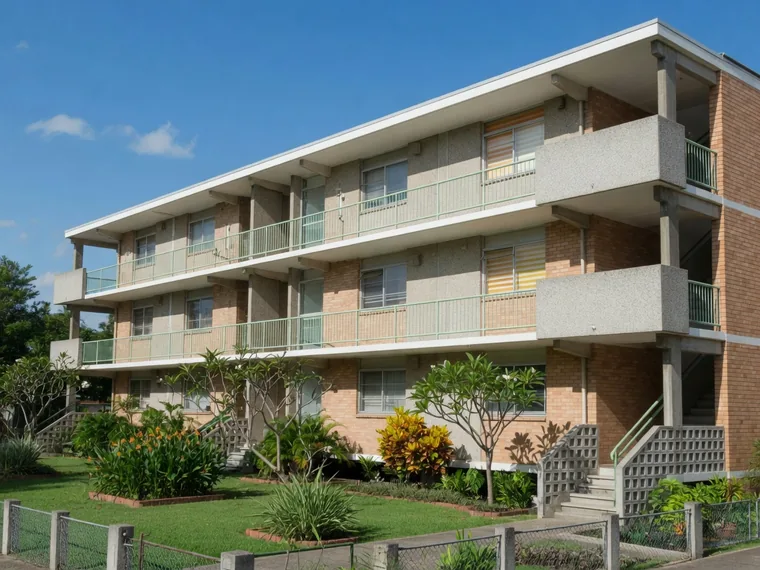
Concrete Cancer Brisbane inspects, scopes and repairs concrete cancer on Brisbane unit blocks, car parks and balconies. One specialist takes the job from the first call to the finished repair, on time and without wasted visits.
Remedial concrete is unusually hard to buy well. The extent of the damage is invisible until the concrete is opened up, and the buyer may be a volunteer committee spending other owners' money. That combination produces quotes that cannot be checked and budgets that get overrun by variations.
A written scope prepared before quoting fixes most of that. It is not a complicated idea, and it is how every job here starts.
A message and photographs of the worst area. For a body corporate, any earlier report or a sinking fund forecast helps the inspector judge the stage.
Hammer tap survey, cover readings and the testing the building needs. Where the question is structural, a structural engineer reports as well.
Quantified work, with the quote tied to it line by line. The scope document is yours.
No obligation to proceed. If you go ahead, we do the repair from start to finish.
We do not publish reviews, testimonials or case studies, because we would have to collect them honestly before we could show them. And we do not give legal advice about who pays — that is a question for your body corporate manager or a strata lawyer, and we say so on every page where it comes up.
Remedial concrete work in Queensland requires the appropriate QBCC licence, and structural work requires an engineer. The QBCC register is public, and it is worth checking any contractor on it. If an inspection suggests the problem is structural, the repair waits for a structural engineer's design even though that is the slower route — see is it structural.
Each suburb page has a small table of site facts. The method is the same for every suburb, so it is written once, here. Recorded 14 October 2026. Every distance runs in a straight line from the centre of the suburb: to the nearest Moreton Bay shore, which is where salt air comes from, to the named river, and to the CBD. They are measured on OpenStreetMap, which also gives the street and park names. A distance over 30 km is left out. Heights are from the Copernicus 90 m elevation model: one reading at the centre and eight on a ring 250 m out. Where a ring point falls on water it has no ground height, so it is left out and the table says how many.
A 90 m model smooths out small slopes, so no suburb page draws a conclusion about a single block from it. The salt a particular building takes depends on its own aspect and height, so the inspection records that on site.
The suburbs below cover the 1960s–80s walk-up belt and the bayside strip, where salt air can reach the steel faster.
Tell us what the concrete is doing. We will inspect it and give your committee a written scope and a quote it can actually vote on.