The mechanism
Steel rusting inside concrete, and rust taking up six times the room the steel did. Everything visible follows from that one fact.
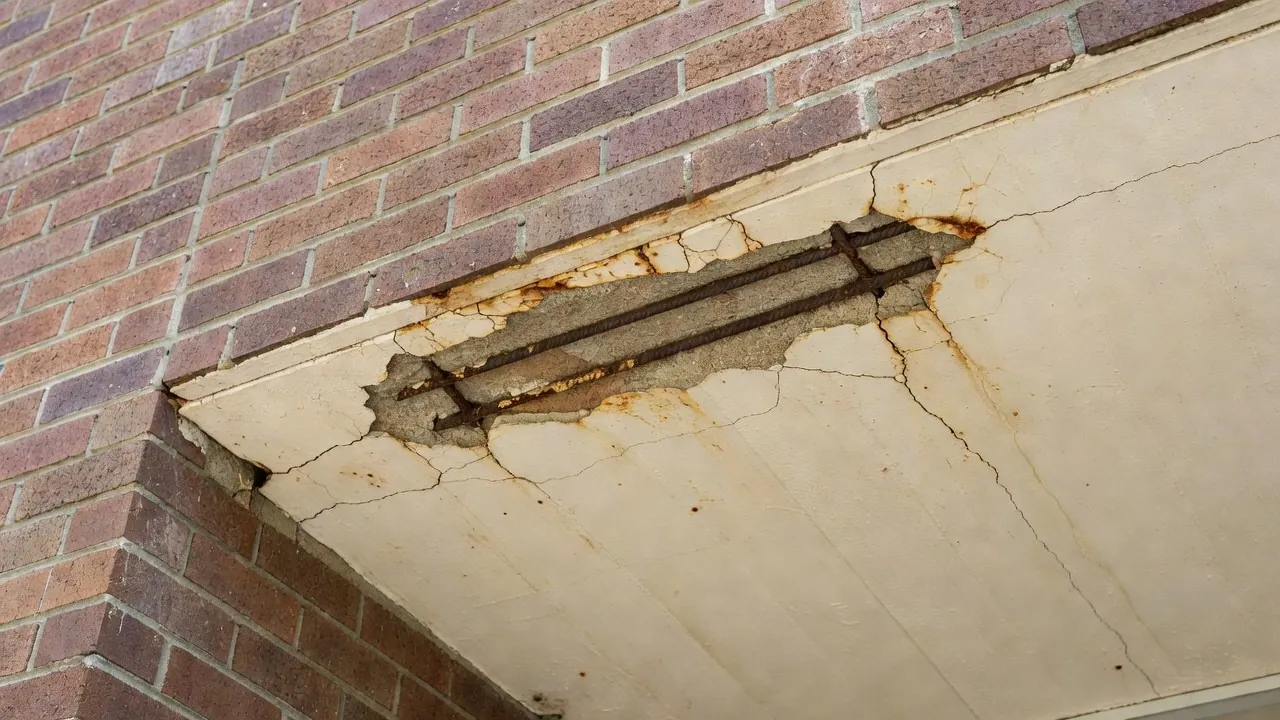
Concrete Cancer Brisbane inspects and repairs concrete cancer across Brisbane, and this is the explanation worth having before you read a single quote. Concrete cancer is not a disease of concrete. It is corrosion of the reinforcing steel, and the concrete damage is a symptom.
Fresh concrete is strongly alkaline — a pH somewhere around 12.5 to 13. At that alkalinity a microscopically thin oxide film forms on the surface of the reinforcement and holds there. That film is called the passive layer, and while it survives, the steel will not corrode even though it is surrounded by moisture. This is why reinforced concrete works at all, and why buildings from the 1920s can still be sound.
Carbon dioxide from the air reacts with the concrete and neutralises its alkalinity, advancing inward from the surface as a front over decades. When that front reaches the depth of the steel, the passive layer dissolves and corrosion begins. It is slow, even, and eventually affects everything of a given age.
Chloride ions — from sea air, from de-icing salt elsewhere, occasionally from the original mix — reach the steel and break down the passive layer locally without changing the pH. Far faster than carbonation, and it pits the bar in spots rather than degrading it evenly.
Brisbane produces both. Inland suburbs are mostly carbonation. Bayside and riverfront buildings get chloride as well, and that combination is the aggressive one. See carbonation versus chloride for how they are told apart, because the repairs differ.
Steel that corrodes converts to iron oxide, and iron oxide occupies substantially more volume than the steel it came from — commonly cited as up to six times. That expansion takes place inside a rigid material with nowhere to go, so it exerts pressure on the concrete surrounding the bar.
The sequence is consistent. First a fine crack forms along the line of the bar, which is why concrete cancer cracking runs straight while shrinkage cracking wanders. Then rust staining bleeds through. Then the cover separates from the steel and sounds hollow when tapped, which is called drummy. Then it falls off, which is spalling. Only at that last stage is the problem obvious from the ground, and by then it has been running for years.
Every stage makes the next one faster. A crack admits more water and oxygen than sound concrete does. Spalled cover exposes the steel to the weather directly. And in Brisbane's humidity there is no dry season to slow it down. This is the reason deferring a repair costs more than the inflation on the quote — the work itself grows. That is set out with numbers on what happens if you do nothing.
The suburbs below cover the 1960s–80s walk-up belt and the bayside strip, where salt air can reach the steel faster.
Tell us what the concrete is doing. We will inspect it and give your committee a written scope and a quote it can actually vote on.