The question every committee asks
It progresses, and the repair grows. Here is that answer with numbers attached, which is more use to a general meeting than a warning.
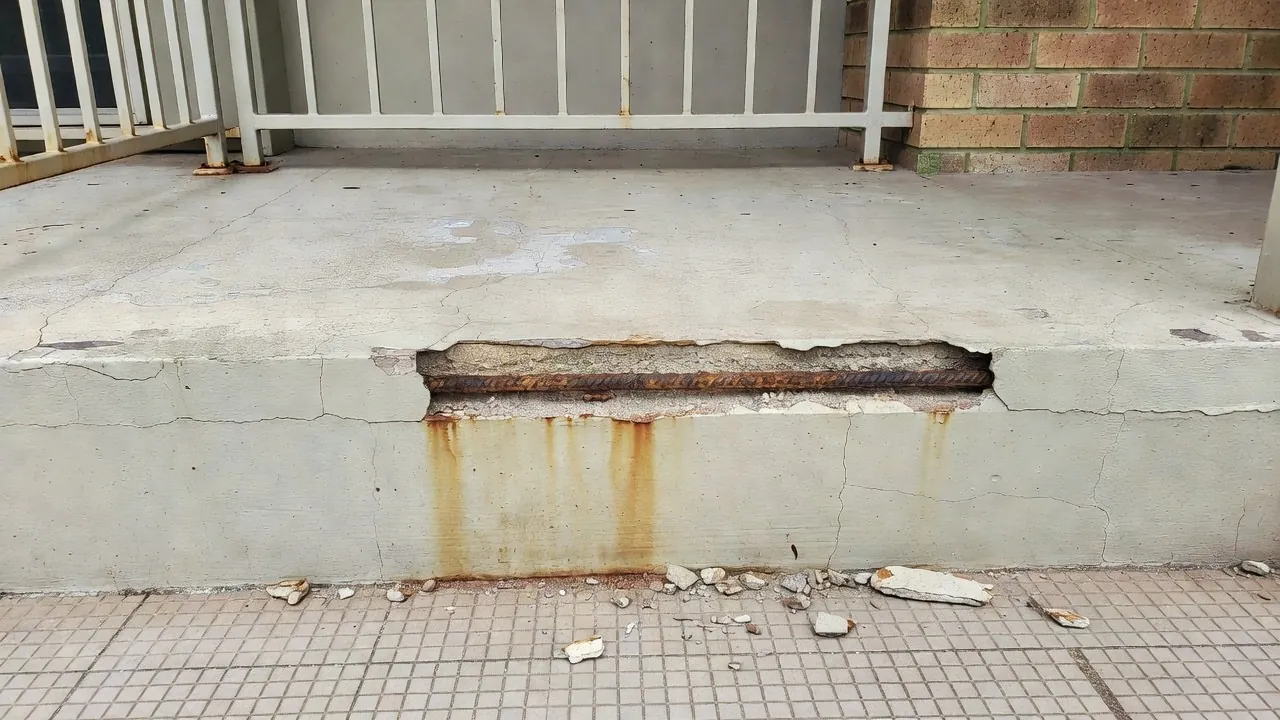
This is a fair question and it deserves a straight answer rather than alarm. Concrete Cancer Brisbane would rather a committee deferred with its eyes open than approved work it did not understand.
Corrosion does not pause. Once the passive layer is gone, the process continues at a rate set by moisture, oxygen and temperature — all of which Brisbane supplies generously all year. Each stage then makes the next one faster: a crack admits more water than sound concrete, and spalled cover exposes the steel to the weather directly. The curve is not linear, and that is the practical point.
| Stage | What the repair is | Rough scale |
|---|---|---|
| Cracking and rust staining | Crack injection and a protective coating | Lowest — hundreds per metre |
| Drummy but not fallen | Patch repair, steel still full section | Patch rate per square metre |
| Spalled, steel exposed | Larger patch, steel treatment, anodes | Materially more per square metre, over a bigger area |
| Section loss | Supplementary reinforcement, engineer involved | Several times a patch repair |
| Structural compromise | Element replacement, propping, possible evacuation of the area | Different order of magnitude |
The ranges behind those stages are on the cost page. The reason deferral is expensive is not inflation on the quote — it is that the job moves down this table while you wait.
Separately from cost, a body corporate has duties regarding the safety of common property. Concrete falling from a soffit or a balcony edge onto a walkway, a car or a person is foreseeable once drumminess has been identified in a report. A committee that holds a report identifying a hazard and resolves to do nothing is in a materially different position from one that has never been told. That is a matter for your body corporate manager or a lawyer, not for us, but it is worth raising before the vote rather than after.
Where the money genuinely is not there this year, the defensible version is: isolate anything overhead that could fall, get the scope and the costing done now so the sinking fund can be adjusted, stage the work on risk rather than on what owners can see from the street, and re-inspect on a defined interval rather than waiting for the next piece to land. That is a plan. Doing nothing without one is the version that gets expensive.
The suburbs below cover the 1960s–80s walk-up belt and the bayside strip, where salt air can reach the steel faster.
Tell us what the concrete is doing. We will inspect it and give your committee a written scope and a quote it can actually vote on.