New Farm, QLD
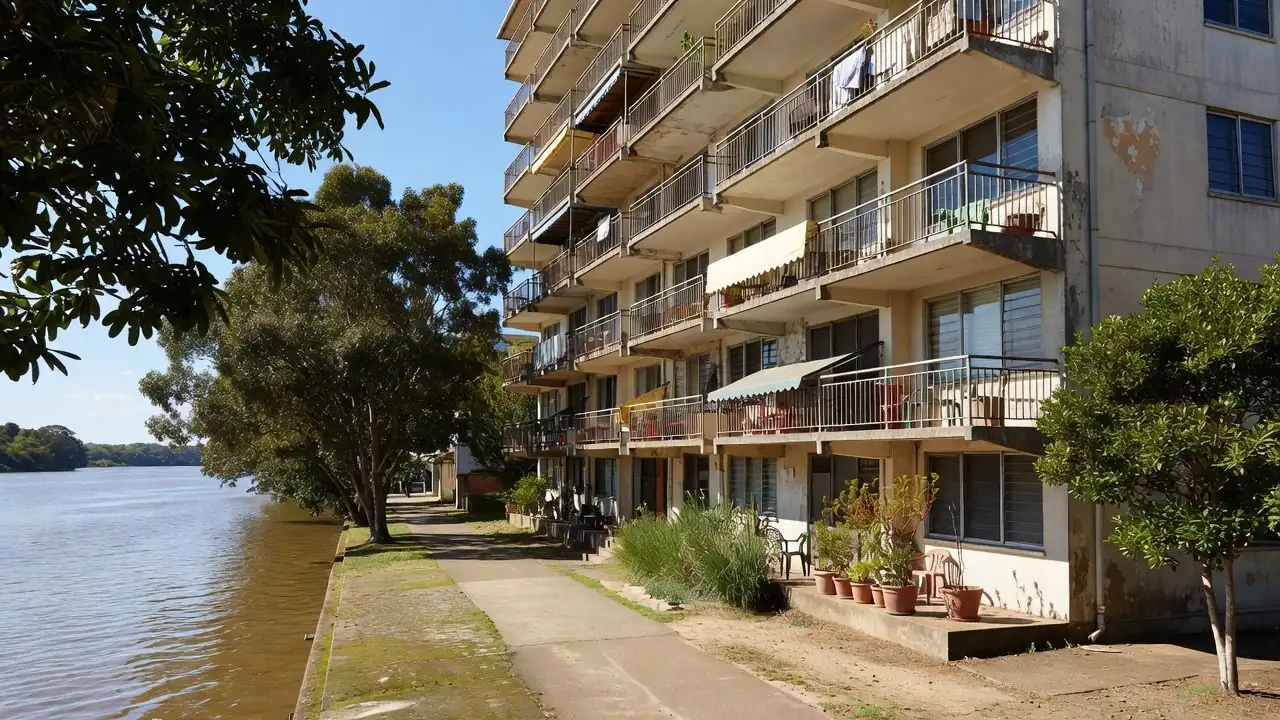
New Farm: riverfront walk-ups from the 1960s and 70s.
Concrete Cancer Brisbane inspects and repairs concrete in New Farm, where the typical buildings are 1960s–70s walk-up units, some art deco, and the written scope comes before any repair price.
New Farm's walk-up blocks from the 1960s and 70s are the kind of building this problem affects: open access walkways and slab balconies. The river adds humidity, and on the tidal reach it may add a little chloride, without the full bay exposure. A building in its fifth or sixth decade has given carbonation time to reach the steel where cover is thin, and damage can appear here on sheltered elevations that a coastal explanation would not predict.
| Typical buildings | 1960s–70s walk-up units, some art deco |
|---|---|
| Nearest Moreton Bay shore (salt air) | about 11.9 km (straight line) |
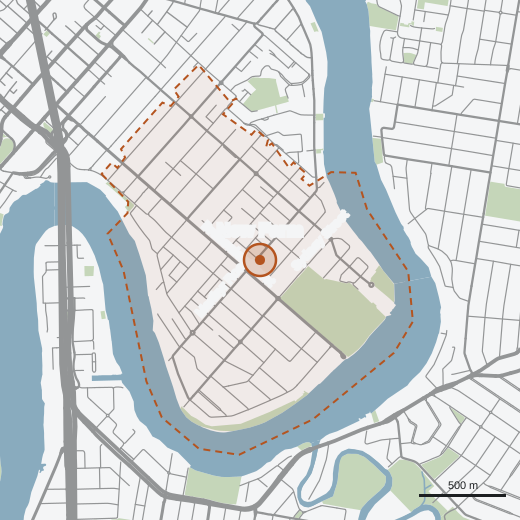
| Distance to the Brisbane River | about 0.7 km (straight line) |
| Ground height within 250 m | about 5–26 m above sea level |
| Brisbane CBD | about 2.2 km (straight line) |
| Main streets in the suburb | Brunswick Street, Merthyr Road, Sydney Street and James Street |
| Parks in the suburb | New Farm Park, Powerhouse Park and Merthyr Park |
New Farm's centre is 11.9 km from Moreton Bay, which puts it in AS 3600's near-coastal band (1 to 50 km, class B1), not the coastal one. The Brisbane River is 0.7 km from the centre. The river is tidal here, but it is not the open bay, so on most New Farm blocks carbonation is the mechanism to test first, as the detail above says. A riverfront block with balconies over the water is the case where a chloride test is worth adding.
Prices are on the cost page and the measuring method is on the about page. Nearest suburbs with a page here: Kangaroo Point (about 1 km), Woolloongabba (about 2 km), Coorparoo (about 3 km), Hamilton (about 3 km).
The suburbs below cover the 1960s–80s walk-up belt and the bayside strip, where salt air can reach the steel faster.
Tell us what the concrete is doing. We will inspect it and give your committee a written scope and a quote it can actually vote on.