Indicative prices
Published ranges, and an honest account of what moves a job from one end of them to the other. A committee cannot budget from silence.
Remedial concrete pricing is genuinely variable, which is a reason many in the trade do not publish prices. That is understandable and it is unhelpful when you are trying to work out whether to commission a report. Concrete Cancer Brisbane publishes ranges instead. They are ranges, not quotes, and a fixed price follows a scope.
| Work | Indicative range | What it covers |
|---|---|---|
| Inspection and written scope | $450 plus GST | A hammer tap survey to find drummy areas and cover meter readings, then a defect schedule and a written scope your committee keeps. Every price below is quoted only after that visit. |
| Structural engineer's report | $1,800 – $4,500 | Where the extent is unclear, a slab is post-tensioned, or the committee needs a structural engineer's opinion before committing to a levy. |
| Concrete repair, patch method | $650 – $1,400 per square metre | Cut back to sound concrete, expose and treat the steel, then reinstate with a repair mortar. The standard remedial approach for localised spalling. |
| Crack injection | $180 – $420 per linear metre | Epoxy or polyurethane injection where cracking is the route in and the steel is not yet badly affected. |
| Sacrificial anodes, per anode | $95 – $180 | Zinc anodes set into the repair to protect the surrounding steel. Worth it where chloride is present, because a patch alone can accelerate corrosion at its edges. |
| Balcony repair and re-membrane, typical unit | $4,500 – $16,000 | Concrete repair plus a new waterproof membrane and finish. Doing the concrete without the membrane simply schedules the next repair. |
| Protective anti-carbonation coating | $55 – $110 per square metre | Applied after repair to slow further carbonation. It is maintenance, not a cure, and it does nothing for steel that is already corroding. |
| Full remediation, small walk-up block | $60,000 – $400,000 | The range is enormous because access, extent and whether scaffolding or swing stages are needed dominate the cost. This is why a scope comes before a number. |
Prices are indicative ranges only. Remedial concrete work is priced from a scope prepared after inspection, and a fixed quote follows that.
How these figures were set: the $450 plus GST inspection is the one fixed price, set on 8 September 2026. The repair ranges were entered when the site was built in August 2026 and have not yet been checked against our own written quotes, so treat them as a budget guide only.
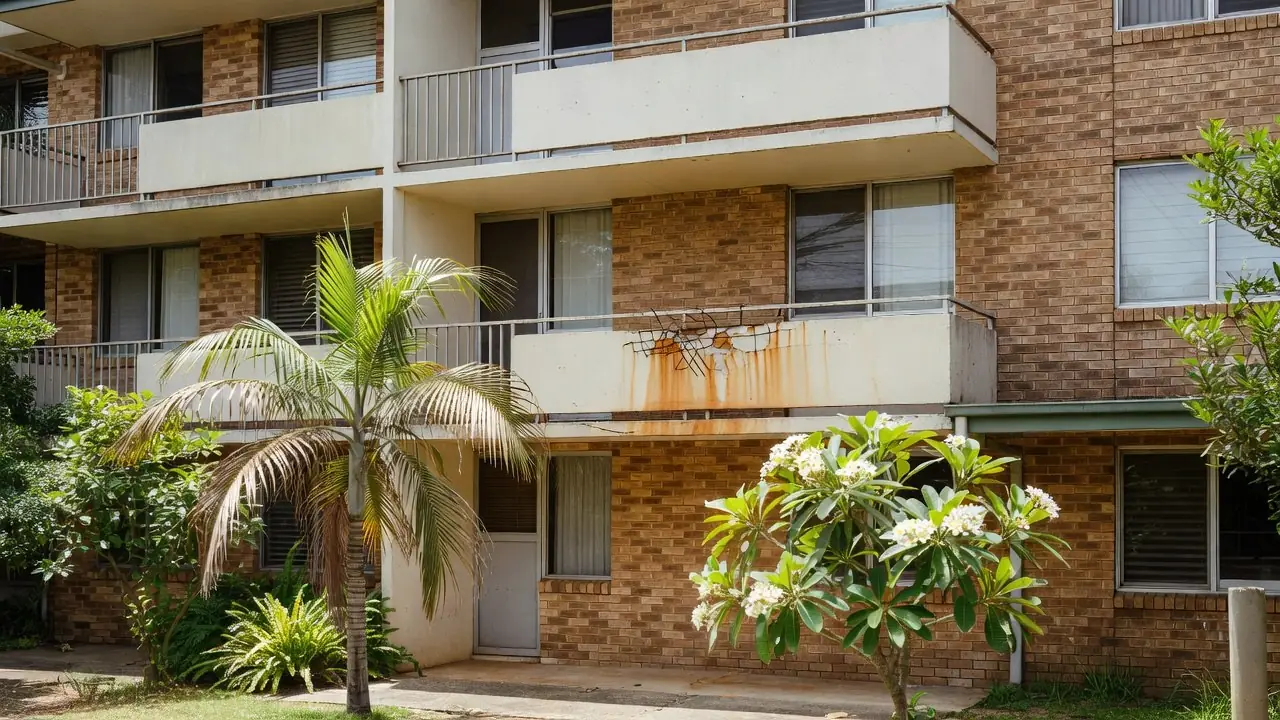
On a three storey walk-up you can often work off a scaffold. On a taller block you may need swing stages or an elevated work platform, and on a constrained site you may need a crane permit and traffic management. Access can cost more than the concrete repair itself.
A hammer tap survey maps drummy concrete that has not spalled yet, so the measured area can be larger than the visibly damaged area. That gap between visible and actual is what turns into variations, and it is exactly what a proper inspection exists to close before you commit.
Carbonation damage can often be patched conventionally. Chloride-affected concrete usually needs sacrificial anodes, and sometimes needs the contaminated concrete removed well beyond the visibly damaged area.
Surface rust is one job. A bar that has lost meaningful cross-section needs supplementary reinforcement and an engineer's involvement, which is a different scale of work.
A balcony repair without a new membrane is a repair with a short life. Reinstating waterproofing, screeds and tiling can be a large share of the cost of a balcony job, and it is easy to leave out of a budget.
Working around residents means staging, protection, notices and restricted hours. It is slower than the same work on an empty building and priced accordingly.
On remedial concrete this is not a platitude. A price with no written scope behind it can reflect the smallest assumption about extent rather than better value. Variations then arrive once the concrete is opened up. That is why we write the scope first and quote against it line by line: the committee can see what each dollar buys.
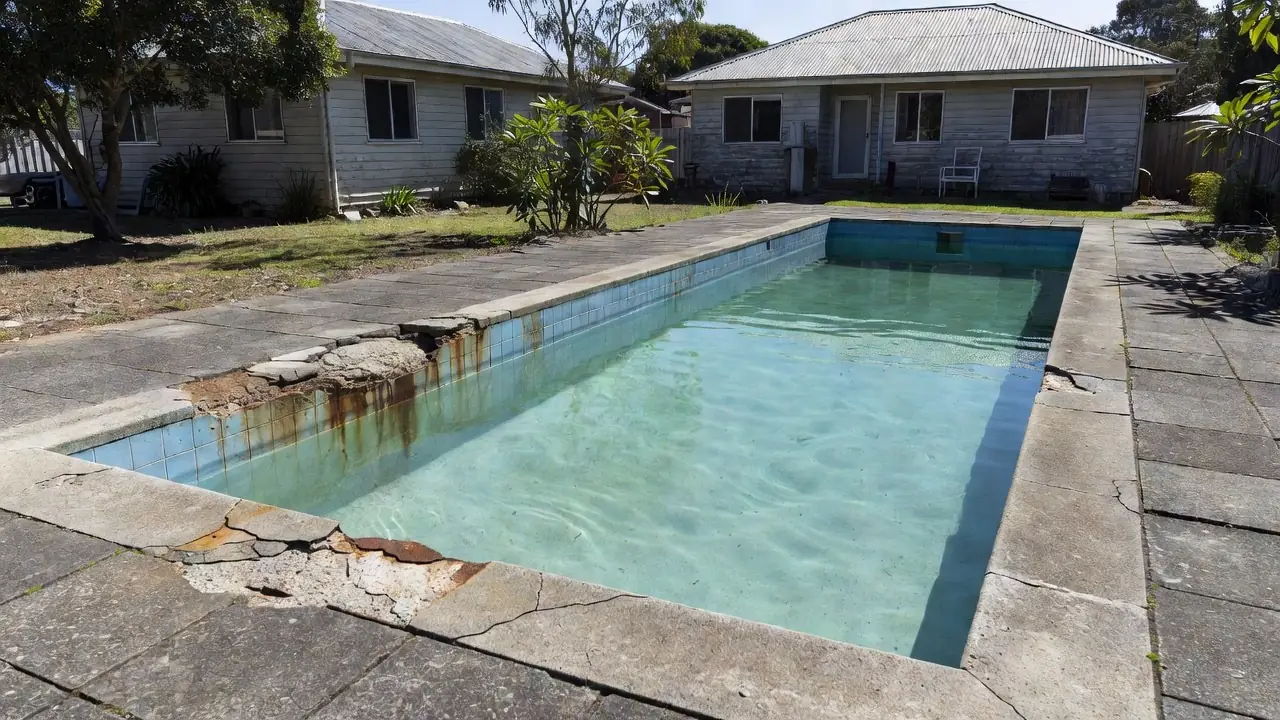
The second reason is method. A patch repair in chloride-affected concrete without anodes can accelerate corrosion in the steel immediately around the patch — the repair changes the electrochemistry at its edges. It looks like a saving and it schedules the next repair. See how the repair is actually done.
The suburbs below cover the 1960s–80s walk-up belt and the bayside strip, where salt air can reach the steel faster.
Tell us what the concrete is doing. We will inspect it and give your committee a written scope and a quote it can actually vote on.